
Te Wairepo Moemoeaa
Regenerating Te Maika ki tai Wetland
Church Bay, Tutukaka
We are grateful to World Wildlife Fund Community Conservation Fund, Mazda Foundation and The Tindall Foundation for their assistance with this project.
Overview
Like many wetland areas, this steep-sided valley was drained in the middle of last century to create grazing land for cattle. The current kaitiaki of this whanau-owned whenua are committed to regenerating this important catchment wetland, reducing sediment runoff into the harbour, providing fish passage for endangered native fish and sanctuary for native birds, invertebrates, and reptiles. Te Wairua O Te Moananui – Ocean Spirit Trust is proud to support this crucial mahi.
Regenerating this wetland will “improve and enhance” the health of the harbour and the community through:
- Water retention to recharge the aquifer
- Flood mitigation by slowing water flow in extreme weather events (climate change) allowing sediment to settle
- Water filtering through the planting of native wetland species, such as oi, carex secta and flax, catching sediment before it flows into the harbour
- Increasing indigenous, ecological diversity through plantings and habitat regeneration
- Carbon sequestration through our riparian planting programme
- Encouraging re-population with native fish species, such as tuna and banded kokopu, by creating fish passages, especially for diadromous species
- Increasing native biodiversity and habitat for native species with exotic weed control
- Encouraging native birds through plantings and mammalian pest management
- Involving the local community in a local conservation project including, Hauora Moana Qualitative Monitoring of the project (find out more about Hauora Moana in our information sheet)
- Involving local schools and young local scientists by including an applied research component
- Encouraging the community to become guardians of their environment
- Creating opportunities for work for local contractors; and rangatahi

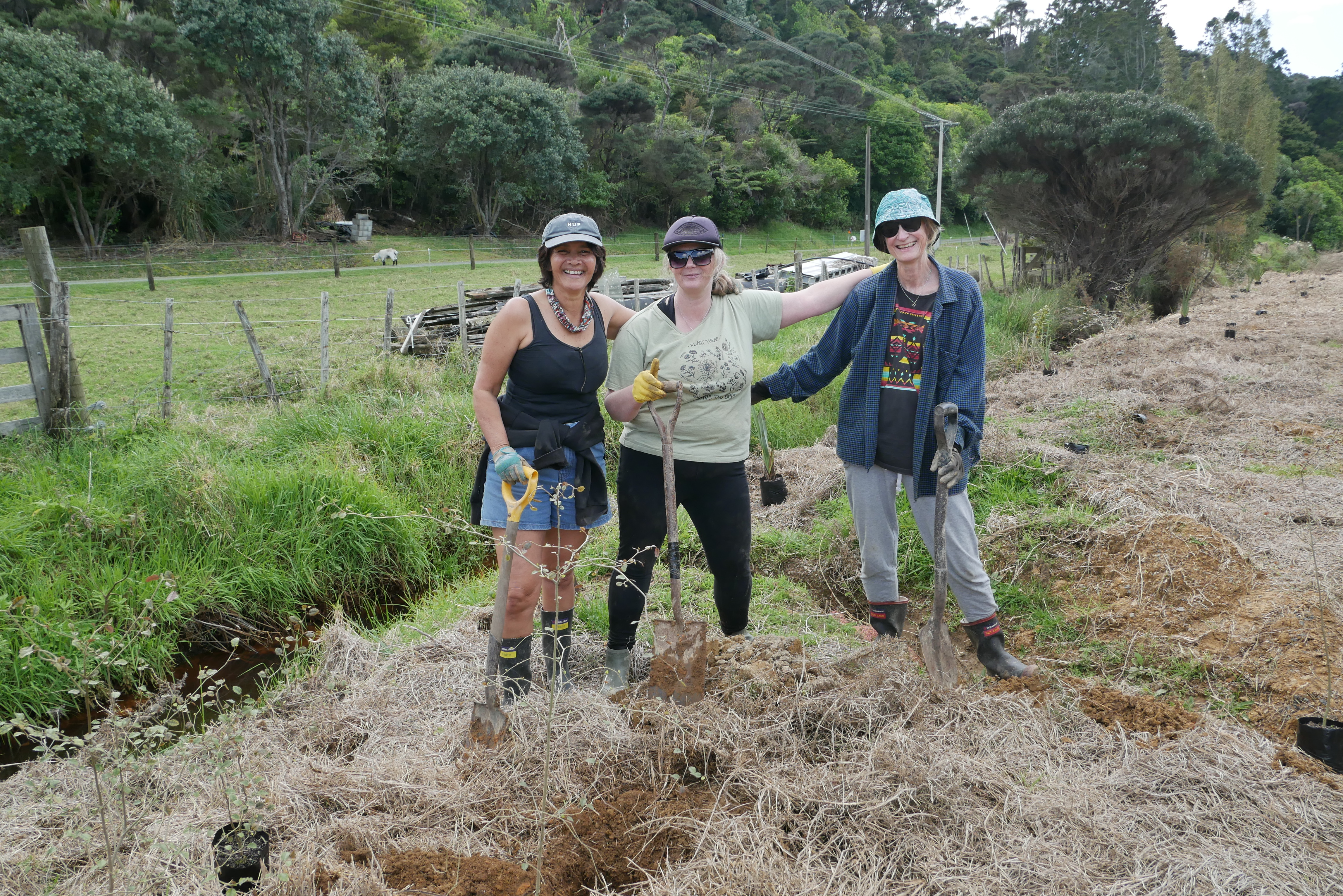
Update 2025
Now that the project is established, the speed of the regeneration has been particularly noticeable.
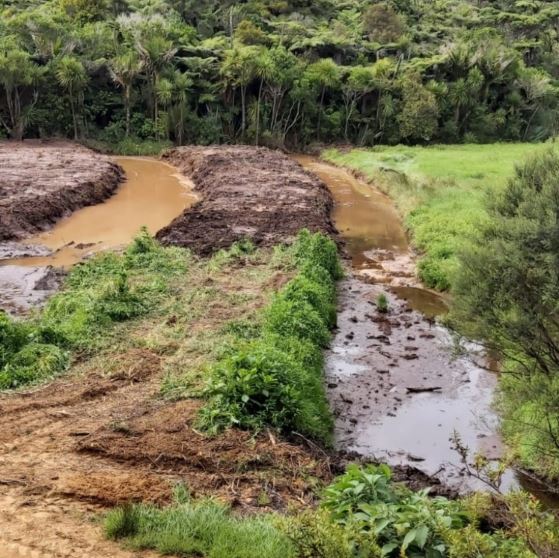
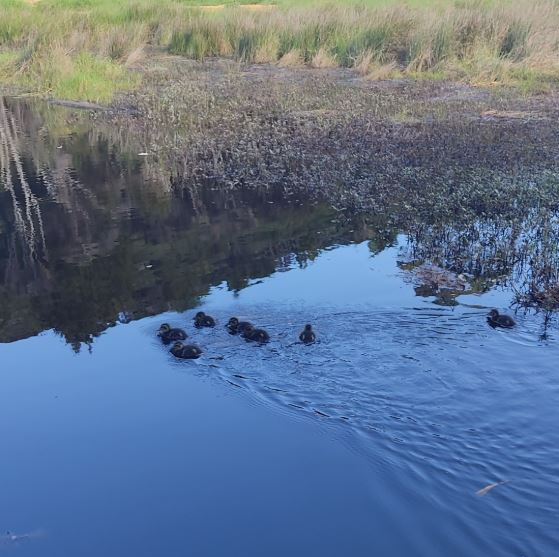
Chinampas (left) were created to support waterflow and biodiversity, thus assisting the regeneration. Brown teal ducklings (right) enjoying the wetland.
“I think the most striking thing about the wetland regeneration was how quickly the remnant plants responded when we stopped up the drains using “leaky weirs”, and the water level rose. Raupo and carex immediately spread, and wiwi showed the historical pathway of the water flow, from before the drain was dredged. The pukeko were very happy, and we even had a clutch of brown teal ducklings last year.” – Alison Giblin
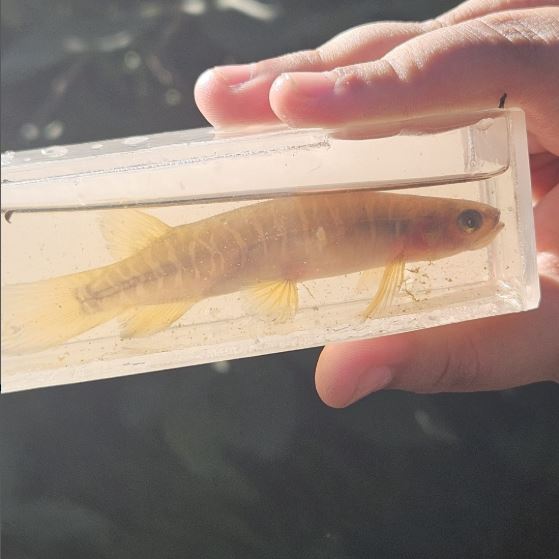

A banded kokopu (above, left) was found in the stream in July 2024, and then in November 2024 akonga from Papa Taiao Earthcare placed a fish ladder through the culvert (above, right) to help diadromous fish migrate from stream to ocean.
 Te Wairua O Te Moananui